Friday, June 29, 2007

God and the Unlikely: Peter and Paul, Francis and Clare

Peace! This is the Feast of Saints Peter and Paul. I often reflect on how God brings together unlikely pairings. Simon the Fisherman from Galilee (Peter) and Saul the Pharisee from Tarsus, Roman citizen (Paul) had little in common and would probably not have never met or put up with each other: except for what--or better, who--they had in common: Jesus Christ. What wonders God does with the glue of love and faith! It's the same with Francis and Clare: the rambunctious son of a merchant would never have had much of a chance to talk with, let alone be friends with a noble daughter like Clare (despite what some movies want you to believe). She had no reason to trust him (after all, he and his faction had driven her family out of Assisi when she was very young) and he had no reason to expect anything much from her (as an aristocrat representative of the old order). Yet, they met: in Jesus Christ, in faith and charity. And look what God did for both of them and for the world through them.

So, as we walk, let us look for God in the most unexpected places, and especially in the most unexpected persons.

Peter and Paul, Francis and Clare, pray for us!

Thursday, June 28, 2007

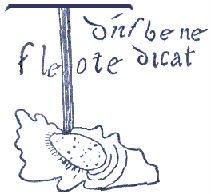
God Uses Clay: St. Irenaeus

Peace and Good!

Many of the early heresies in the Church rejected the Old Testament. They considered it too messy, both in the actions of the people involved and the images of God they found there. Yet, the Church held onto the Old Testament as a vital part of the scriptures, both fulfilled in the Gospels and illuminating them.


St. Irenaeus had to fight against an understanding of faith that was too cerebral: the Gnostics, who proposed that salvation involved 'knowing (gnosis)' and escape from the flesh. Yet, the Word becoming flesh is central to the Gospel message. Irenaeus knew that, and fought to articulate a theology which did not ignore sin, but more importantly did not try to explain away the Incarnation nor the redemption of the body.


Christian conversion is a balancing act, recognizing the reality of sin but in the context of the goodness of all creation, including the body. Weak was we are, balancing these two things is not always easy. Francis himself struggled with it. How to be austere so as to grow in grace, not become some disembodied ghost. Part of his secret was to begin always with praise of God and the goodness of creation. All creation: the sun and the moon, as well as the rocks and the worms and even that part of creation we flee: death. Sister Death.


I conclude with a beautiful quote from St. Irenaeus' Against Heresies:

Since you are the work of God, wait patiently for the hand of your Artist, who does all things at the right time. Present to him a supple and docile heart, and keep the form that this Artist gave you, having in yourself the water that comes from him and without which you would become hard and would reject the imprint of his fingers.By letting yourself be formed by him, you will rise to perfection, for through this art of God, the clay that is in you will be hidden; his hand created your substance… But if you become hard and push away his art and show that you are discontent with the fact that he made you a human being, by your ingratitude towards God you will have rejected not only his art but life itself; for it is the very nature of God’s goodness to form, and to be formed is the very nature of being human. Thus, if you give yourself to him by giving him your faith in him and your submission, you will receive the benefit of his art and you will be God’s perfect work. If on the contrary, you resist him and if you flee from his hands, the cause of your incompleteness will be in yourself who did not obey, and not in him. (Against the Heresies IV, Pr 4; 39,2)

God bless you!

Sunday, June 24, 2007

Birth of John the Baptist

Peace!
This is an ancient feast in the Church. (Note that the celebration of John's birth, sixth months before Jesus', falls on June 24, because in the old way of reckoning, each feast is six days before the beginning of the next month.)

This day is important for all the Church in remembering John, and more importantly, God's work through John. The readings all speak of God knowing and acting from his birth, and even from before his birth, when he was in the womb. Actually, from the moment of his conception. God works in all of us from that moment, for life is a continual gift.

It is interesting that in the debate over the use of embrionic stem cells, the Church's opposition is considered part of being 'anti-science.' But it's just the opposite: the oppostion comes because of what science tells us: that even the single cell produced by the union of a sperm and an egg contains all the DNA information for a complete and unique individual person! In earlier times they did not know that, and discussed when an embryo or a fetus was 'quickened,' i.e., when it received its soul. Yet now, we know that the 'human-ness' of each person goes all the way back to conception. Science tells us that, yet some choose to ignore it.

The feast of the Birth of John the Baptist is also significant for Franciscans, because that is Francis's baptismal name: Giovanni Battista. His father later made everyone call him Francesco, "Frenchy." This was probably because a cloth merchant didn't think it appropriate for his son to be named after a man who wore camel's hair! Francis didn't seem to live up to his patron saint at first, but his life showed that he was more like the Baptist than anyone would have guessed.

May John the Baptist help us to witness to Christ, to follow him, and to live our vocation to love as God loves, a vocation given to every one of us from the moment of our conception.

God bless!

Wednesday, June 13, 2007

The Clay God Uses: Anthony of Padua


Peace and Good!
At the Basilica of Anthony of Lisbon (he was Portuguese, though he died and was buried in Italy) in Padua, one of the major relics on display is Anthony’s tongue, a reminder of his great ministry of preaching. Anthony would probably think this very appropriate because, while the tongue is used in speech, in itself it is just a muscle, with no power to make a sound or communicate anything. The tongue needs the breath from the lungs and the vibrations from the vocal chords.


So the preacher does not give his own message, but has to open himself to the action of the Holy Spirit to proclaim the Word of God. Yet, just as the tongue is important in forming words, so the preacher is called to use his gifts to share the Word of God with the men and women.
St. Anthony used the science and culture of the thirteenth century to communicate to others the Gospel message, but always grounded himself in prayerful contemplation of that message first. In this he followed the example of St. Francis while also showing a different aspect of Franciscan ministry.
May he help us today, to live and proclaim the Gospel, to be the tongue giving voice to the Word of the Lord in the Spirit.
God bless!

Monday, June 11, 2007

The Clay God Uses: Barnabas


Peace and Good! A wonderful trait of St. Barnabas seems to have been his ability to see potential in people. It was he, the Acts of the Apostles tells us (12:25-26), who went to Tarsus to seek Saul to help with the wonderful work of the Spirit in Antioch. The other Christians had sent Saul, the former persecutor, away to Tarsus and seemingly forgot about him, perhaps even still suspicious of his conversion. But Barnabas saw his potential, which he wonderfully encouraged. (His name, after all, means 'son of encouragement.' Acts 4:36)

It is interesting that later in Acts he and Saul (now Paul) have an argument about his young cousin John Mark, who had abandoned them earlier Acts 15:36-39). Barnabas saw the potential in the young man and argued strongly that he deserved another chance. Paul disagreed, and in the end they parted. In this matter Barnabas was wiser, for John Mark is usually identified with the author of the Gospel of Mark. So Barnabas' encouragement was wise.

I think of Francis encouraging others to the gospel life. Some of them, perhaps, would not have seemed to be very good material. His prejudices would have warned him that Clare and Rufino were nobles and too used to an easy life. But he saw in them great potential, and encouraged it.

I pray that St. Barnabas will both encourage us in our own lives and vocations, and help us to discern the good in others and the possibilities in them for God's grace to work.

(The painting is of Paul and Barnabas is Lystra Acts. 14)

God bless!

Wednesday, June 06, 2007

The Patience of Tobit?

Peace and Good!
Yesterday's reading from the book of Tobit included a scene where the blind Tobit was told by his wife that a goat he heard was a gift: Yet I would not believe her, and told her to give it back to its owners. I became very angry with her over this. So she retorted: “Where are your charitable deeds now?Where are your virtuous acts? See! Your true character is finally showing itself!” (Tobit 2:14)

This reminded me of a saying of St. Francis: "Blessed are the peacemakers, since they shall be called sons of God" (Mt 5:9). The servant of God cannot know how much patience and humility he has in himself, while he is satisfied. However when the time has come, that those who ought to satisfy him, do the contrary to him, as much patience and humility as is there then, that much he has and not more. (Admonition 13)

Times of trial, problems and difficulties can bring out the worst in us. But this, too, is a blessing from God, because the faults revealed have been there all along. Once we see and recognize them, however, we can ask God's help to be converted from them and grow in grace and wisdom. The temptation is always to ask, "Why is this happening to me, Lord?" But it would be better to ask: "What are you teaching me through this, Lord? How can I grow in Your love and learn to glorify You in my littleness."

That is what Francis learned to do. It does not make our pain go away, but it helps us to know that Jesus Christ walks with us through our pain and wants to lead us through it on the way to salvation. A hard lesson at times, but another grace of the Gracious One.

God bless!

Thursday, May 31, 2007

Our Exemplar: the Visitation

Peace! Just the awesome idea that someone who has just been told that she will be the mother of the Messiah, the Son of God, then undertakes a difficult journey to serve her cousin, who is pregnant with the messenger for the Messiah. Worldly values turned upside down! No wonder St. Francis looked to Mary as the first and foremost disciple of Jesus, following her Son down the path of love and giving. God bless!

Wednesday, May 30, 2007

Peace and Good!

This blog will continue, but recent events and a death in the family have kept me distracted. Keep me in your prayers. May the Holy Spirit bless us all.

Sunday, May 20, 2007

Out of Sight!


Peace and Good! The liturgy of the Ascension celebrates Christ being taken beyond our sight. The Alternative Opening Prayer says: “Our minds were prepared for the coming of your kingdom when you took Christ beyond our sight.” The Second Preface for the Feast of the Ascension says that he “has passed beyond our sight not to abandon us but to be our hope.”
Perhaps if we had Jesus visible among us (and who could bear that sight?), we would be tempted to say that we know where he is, and we would not look any further. Yet we believe that his presence is among us in so many ways: in the Blessed Sacrament, in the Church, which is the mystical body of Christ, in the poor and in the beauty of the world around us, and especially in the suffering he shares with us that we might share His Glory.
Francis came to know this in a very particular way, through his experience of God’s sweetness in his encounter with the leper. He experienced that Jesus Christ was truly present there, in that poor sufferer in front of him. From that experience Francis knew he had to seek the presence of Jesus in all its different manifestations.
Our conversion involves our letting go of an image of Jesus which restricts his presence to the places or ways we are comfortable with. He has gone ‘beyond our sight’ precisely so that we will never stop looking for him. May God help us to open our eyes, or better, to open our hearts to the Holy Spirit (for the Ascension is always tied to Pentecost) so that the Spirit may help us to see with spiritual eyes Christ among us, beyond us, within us, beside us.
God bless!

Friday, May 18, 2007

The Clay God Uses: St. Felix

Peace and Good! Felix (baptized Peter) was born in a small mountain town. Yet he spent almost all his life as a Capuchin in the midst of the busy city of Rome. He was known as Brother "Deo Gratias," because that was what he was always saying, "Thanks be to God." He is the first saint of the Capuchin Order, a man of simple humility and prayer. He is a great example of someone who learned to see God everywhere. His time in prayer before the Blessed Sacrament helped him to see the same Christ present in the poor and the beggars of Rome, and in such friends as St. Philip Neri (in this painting with him). May he ask God to help us see, and be like him, Felix (happy, joyful). God bless!

Monday, May 14, 2007

Choosing Matthias

Peace and Good! Today we celebrate Matthias, chosen to take Judas' place among the Apostles. The method of choosing him has always fascinating me. The Acts of the Apostles says:

So they proposed two, Joseph called Barsabbas,who was also known as Justus, and Matthias.Then they prayed,“You, Lord, who know the hearts of all,show which one of these two you have chosen to take the place in this apostolic ministry from which Judas turned away to go to his own place.” Then they gave lots to them, and the lot fell upon Matthias,and he was counted with the Eleven Apostles.

So what was involved was discernment (who to propose), prayer, and the casting of lots, which could be called luck, except that this was done with trust in the presence of God, more specifically of the Holy Spirit. This puts human decision making in perspective I think. We need to do all we can to make good and right decisions, but in the end we have to trust the power of God to bring about the good.
This helps in understanding the famous story of St. Francis and Br. Matteo. On a preaching mission, they came to a crossroads and were wondering which way to take. They talked about it, prayed, and in the end Francis turned Matteo around and around until he was dizzy and then let go and waited for him to fall. In whatever direction he pointed, they would go. It may sound silly, but it reflects a deep faith and also a key to true peace: to put all we can into making our decisions, but in the end trusting that it is God's will that will ultimately prevail.

Not so easy at time to remember. So we ask St. Matthias to pray for us as we walk on the road and make decisions, big and small.

God bless!

Thursday, May 03, 2007

The Clay God Uses: Philip the Apostle


Peace! Philip, like Thomas, is most often remembered for a deficiency. At the last supper Jesus says, "After I have been with you so long, do you still not know me?" Yet, in the Gospel of John, Philip is also the one who brings other to Jesus, both Nathaniel, and the Greeks who want to see Jesus. Our task, like that of the apostles, is to bring others to Jesus, even if we don't always understand completely what God wants to do with them. We trust, like Philip, that Jesus is the one who can show us the Father--as Jesus tells him and us, that is exactly what He came to do. Francis believed this. May Philip, James the Less, Francis and all the saints help us to come to Jesus, and to bring others to Him. God bless!

Tuesday, May 01, 2007

St. Joseph the Worker


Peace!

My father loved to sleep in. My father used to get up every morning before 5 a.m. (sometimes as early as 3:30 a.m.) to be able to get to his construction jobs to support his family. I have always thanked God for this example of love.

St. Francis mentioned that the brothers who received the grace of work should do so, but always in such a way as not to extinguish the Spirit of the Lord and His holy operation. Labor with our bodies, our minds, and our hearts, can be a sharing in the work of God (opus Dei), if we allow Him to work in and through us. It doesn't matter if it is big or small, well-known or obscure, if it is done in God. May St. Joseph help us to remember this, and honor one another and all the labor that is done in the name of love. God bless!

Tuesday, April 24, 2007

The Clay God Uses: Fidelis of Sigmaringen


Peace and Good! Today I am reminded about the true meaning of the word 'martyr:' witness. Fidelis worked hard for the unity of Christians, and would not compromise his adherence to the Catholic faith. What makes him a witness is that he was willing to die to defend that faith, but not to kill for it. Thus, he followed Jesus faithfully (his name means faithful). I would love to see us remove the name martyr from those who kill others and themselves in the name of God. But better, maybe we can pray to St. Fidelis to help us all resist the power of hatred while standing firm in favor of the power of God and the love Christ teaches us.

Sunday, April 22, 2007

They didn't know it was Jesus

Peace! In John's accounts of the resurrection appearances, the setting seems so unremarkable. A man in the garden, a figure on the lakeshore. I once read this gospel in the spot where tradition says this occured. It was an incredible sensation, to read the words, "They were not far from shore, just about a hundred yards," and then point to the spot. Jesus did not appear in flashes of lightning or amid wind and earthquake, but quietly walking on the lakeshore and giving some fishermen advice. God walks in the everyday world. Our task is not to make God appear among us, but to recognize His presence. That is what Francis learned to do, like the apostles learning to recognize Jesus' presence even in the humiliating and painful events of life. God help us all, too, for His love is for all of us. Happy Easter!

Thursday, April 19, 2007

I See Nothing but Violence and Strife in the City


Peace! Blessings in the Risen Christ!

As we are daily reminded, there is much violence in the world. At the extremes we can either try to ignore it as much as possible or let it dominate our thoughts. Or take the third way: know that there is violence and evil, but never believe that they are ultimate. The reason to believe that: Jesus' death and resurrection. This is what helped Francis survive his own experiences of violence, both in the world around him and within his own heart. Thirteenth-century central Italy was an incredibly beautiful world, filled with an incredible amount of violence. Francis had experienced Assisi's war with Perugia, a very violent local affair, not as an observer but a participant. That experience of the futility of violence, when opened up by the teachings of the living Christ, helped make him an "instrument of God's peace." May St. Francis help us to be such in the world where violence still seems to reign, from Virginia to Iraq to Darfur. And with Francis may we humbly do what we can to be instruments of peace. God bless!

Saturday, March 31, 2007

Will He Come to the Passover Feast?

“So from that day on they planned to kill him. So Jesus no longer walked about in public among the Jews, but he left for the region near the desert, to a town called Ephraim, and there he remained with his disciples. Now the Passover of the Jews was near, and many went up from the country to Jerusalem before Passover to purify themselves. They looked for Jesus and said to one another as they were in the temple area, “What do you think? That he will not come to the feast?” (John 11)

The hostility of his enemies is growing, and Jesus knows that his actions will have consequences. He does not push things unduly, but he has a choice: celebrate the great feast of the Lord’s deliverance in a public place, and so put himself within the reach of his enemies, or hide away and praise the Father quietly in private. John always emphasizes in his Gospel that Jesus chooses, he is not just some unwitting pawn.

That is part of conversion: choosing to act, to do things, even though some of them may open us up to attack. That is a choice Francis had to make in regard to facing his father. For a while, he was too afraid of the consequences and hid from his father. But at last he knew if his choice were to be truly authentic, he had to face his father no matter what. I am sure Francis hoped his father, Pietro, would understand his choices and support him, or at least let him go with a tacit blessing. But he knew his father, and knew that there were other more likely reactions. He went forth, anyway, right into the heart of town, to meet Pietro and see what would happen, trusting that whatever happened God would be there.

Knowing God is with us in hard decisions is so vital. And so Jesus chose to show us the truth of it: His Father was with Him, even when He chose to go to Jerusalem for the Passover and face the hostility that was building. May God give us this faith and courage too, in all the little decisions as well as the big ones that are difficult to make.

Peace and Good!

Thursday, March 29, 2007

The Word Betrayed

We near Holy Week, and the readings take a definite turn. The tension is mounting as Jesus confronts the unbelief of this world.
In deciding to live among us, the Word opened itself to both being accepted and being rejected. That is what love does, and so decisions made from true love have to be made with the awareness that betrayal is always an option. Yet, that is what God calls us to: choosing to love others while knowing that love will be betrayed in one way or another. Even the death of a loved one is a form of that betrayal, because human love promises eternity but can’t deliver it. Which is why, of course, it has to be grounded in divine love.
Francis’s conversion included accepting others: “The Lord gave me brothers.” These were the brothers who loved and supported him, who challenged and pained him. But he accepted it as part of the via crucis, the way of the cross.
So, Love: but know you will be disappointed and even betrayed. Love in Christ: and know that the crucifixion and resurrection are tied together in the one great mystery of faith.
Peace and Good!

Monday, March 26, 2007

The Word Made Flesh


Peace and Good! There are two extreme views of human free will: the ‘scientific’ view that we have none, that all is genetically, physically, and chemically predetermined, or its opposite, that our own will is the ultimate reality, the ultimate good. It is this second view that Milton puts into the mouth of Lucifer: “Better to reign in hell than serve in heaven.”
The feast of the Annunciation tells us that neither extreme is correct. We have a free will, and that will enables us to consent or not to being what we are: creatures of God. Yet, saying ‘yes’ to God does not mean that things are within our control. Mary says ‘yes’ to God through the angel (thank you, Mother), but she does not know all that it will entail. She does not control the way in which her Son will be the Messiah. That’s why her ‘yes’ was not complete until she stood beneath the cross and accepted that her Son, crucified and dying, was still indeed the Messiah, the Son of God.
Francis did not know what accepting the Lord’s will in his life would entail. He reminded himself often in prayer that it was “a true and holy will.” Sometimes this was obvious, sometimes it was not. But he ultimately had faith in the fact that God is good and so God’s will is what is best for us.
We all have to struggle to live this by learning to say ‘yes’ to God in our lives. We do this in many different ways. Parents accepting a child into their lives are called to say, ‘yes, we will accept this child,’ even though they have no idea how that infant will turn out. The way of conversion is the way of faith, believing the in goodness of God and seeking His will. We don’t do that all at once: conversion is a daily process.


Today let us ask those who have gone through this to help us: Holy Mary, our Mother, Francis and all the saints. Let it be done to us according to God’s Word, the Word made Flesh who dwells among us.

Thursday, March 15, 2007

Preaching the Unwelcome Word

Peace and Good! Jeremiah the prophet had it hard: not only was his message unpopular, but God even told him that no one would listen to him! So why go on? Because God's word burned with in him. There are three reasons to preach, to share our faith: to praise God, to help others, to remind ourselves. Francis knew this. He preached as much to remind himself of the power and goodness of God as to tell others of it. This is why he was able to be a preacher both humble and yet forceful. And in all, praise the goodness and power of God. That is what we all are asked by God to do, a task not always easy, but one in which is life.
God bless!